





Taking to the Skies of Granblue Fantasy: Worldbuilding
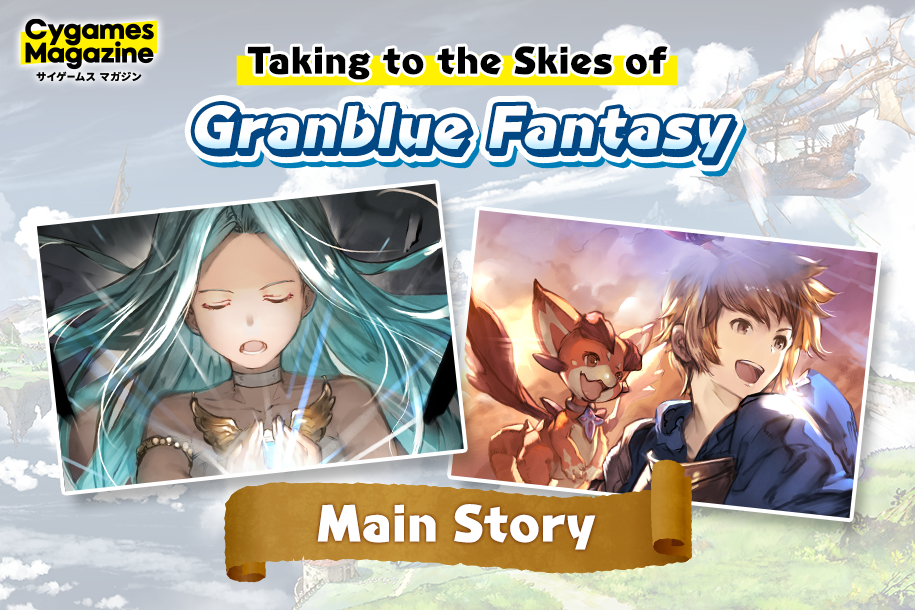
Granblue Fantasy is an RPG set across sprawling skydoms, where you become a skyfarer and take to the skies with steadfast companions. After eleven years of charting this journey, Granblue continues to soar forward into a new chapter.
This article is the first in a two-part series for players yet to begin their journey. In this first part, we’ll highlight the worldbuilding and other elements that make the main story so unique and sit down for an interview with Tetsuya Fukuhara, creative director of the Granblue Fantasy series.
In this interview, we’ll get his take on the origin of the series and tips for new players—veteran skyfarers won’t want to miss these insights either!
For a more in-depth overview of the main story, players are encouraged to read the second article. In that part, we’ll also hear from Granblue team members about how to further enjoy the game and the scenes players can see in the story.
Note that this article will contain spoilers.
About Granblue Fantasy
First launched in 2014, Granblue Fantasy is a classic RPG for mobile devices with over 38 million registered players. Players become the captain of a skyfaring crew and sail to floating islands dotting the Sky Realm. Divided into various skydoms with their own histories, cultures, and values, these islands serve as the game’s setting. Some hide ancient ruins, others bustle with mechanical metropolises, while others still are verdant archipelagos. Each island has its own tales just waiting to be uncovered.
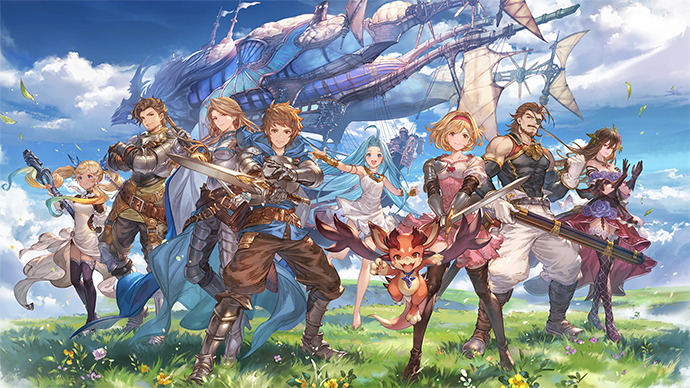
Granblue features strategic turn-based battles and a dramatic storyline interspersed with over eight hundred unique and dynamic characters. Chock-full of familiar RPG features like classes and character & weapon progression systems, the game also offers engaging co-op raids challenged by players across the globe.
The Start of a Journey
The story begins on the sleepy island of Zinkenstill, when the protagonist receives a letter from their father stating that he’ll be waiting in Estalucia, the island of the Astrals.
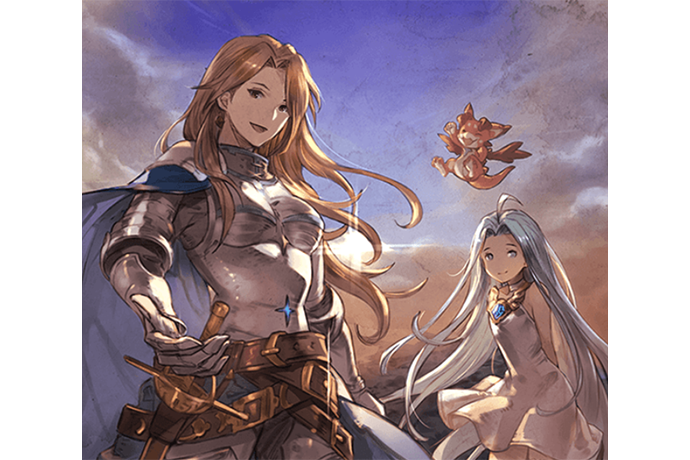
Spurred on by his words, the protagonist decides to embark on a journey to beyond the sky’s end along with their companion Vyrn. Right as they set off, the pair run into the mysterious girl Lyria and her knightly protector Katalina—an encounter which sparks a truly magnificent adventure across the boundless skies.
The Worldbuilding and Battle System of Granblue
Where Islands Float in a Sea of Clouds
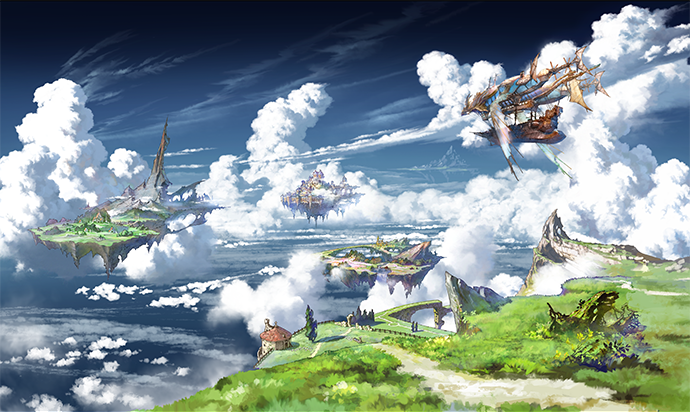
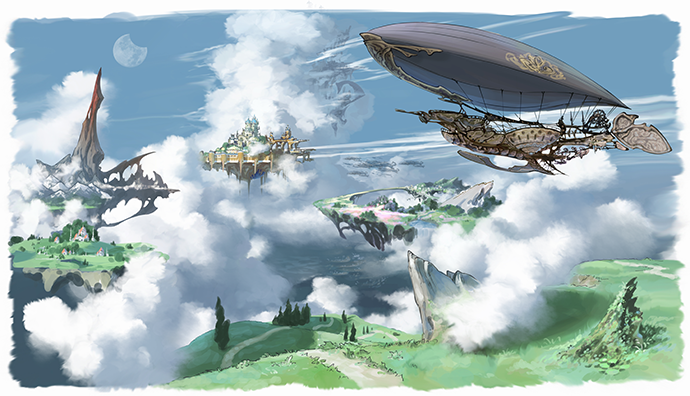
Granblue is set in a world in which countless islands of all shapes and sizes float in a sea of clouds. Long ago, invaders called the Astrals arrived in this world. Wielding unnatural power and commanding beings known as primal beasts, they ruled over the Sky Realm and its inhabitants, the skydwellers. It was only after a long conflict (now called “the War”) that the Astrals disappeared. But the War still impacts the islands to this day, and Astral relics lie scattered about the Sky Realm.
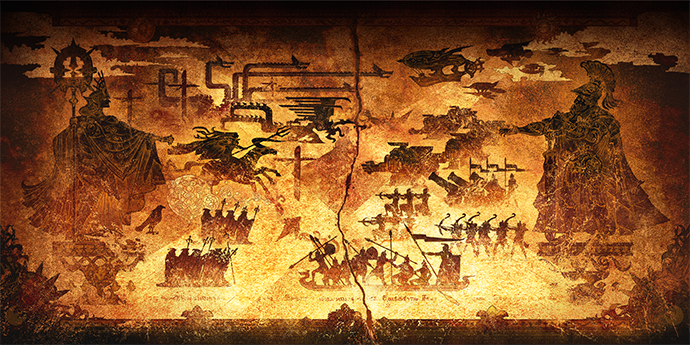
Airships connect the various islands that dot the skies, enabling the protagonist’s crew to adventure to an assortment of locations and ruins—at times into lands where primal beasts slumber.
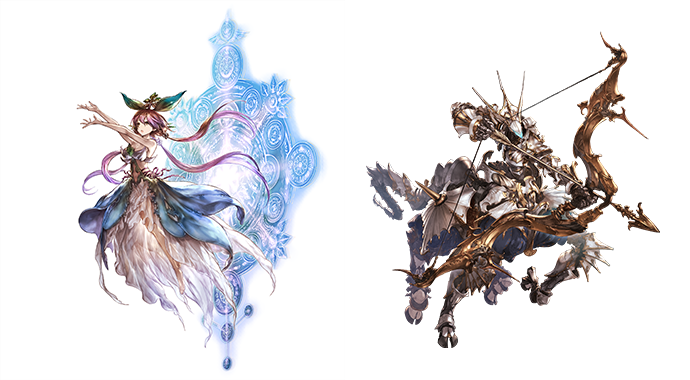
Beings of Immense Power Lie Hidden Throughout the Realm
Discarded by the Astrals, primal beasts now lurk amid the islands of the Sky Realm. Once the Astrals’ most powerful assets in battle, these great beasts possess godlike powers. But, after the War, they were left to slumber in the form of prisms, and melded with the beliefs and culture of the lands in which they inhabited. As primals bow only to the Astrals, any skydweller knows that a rampaging primal beast is an event on par with a great natural disaster.
A Tale Buoyed by a Robust Combat System
Battles in Granblue are turn-based, putting skyfarers at the helm—players choose from myriad characters, weapons, and summonable primal beasts to form their parties and take on enemies of ever-increasing difficulty. The key to victory? Target enemies’ weaknesses with the best elemental affinity and draw on each character’s unique skills.
Other in-game choices allow players to fine-tune their combat experience, depending on what role they choose from the class system, how they specialize their attacks, or which friends they choose to support them.
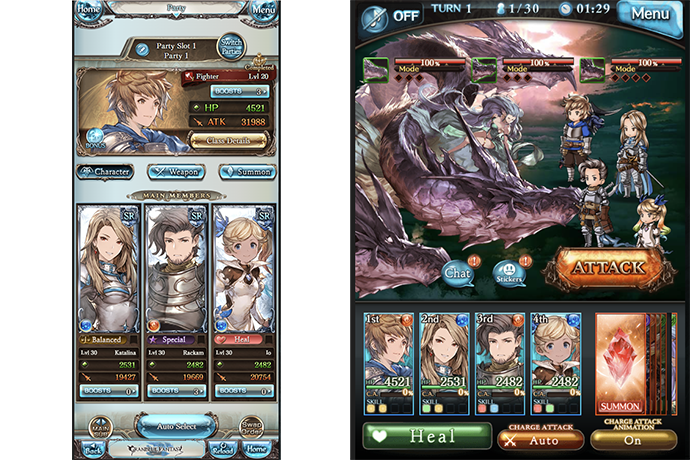
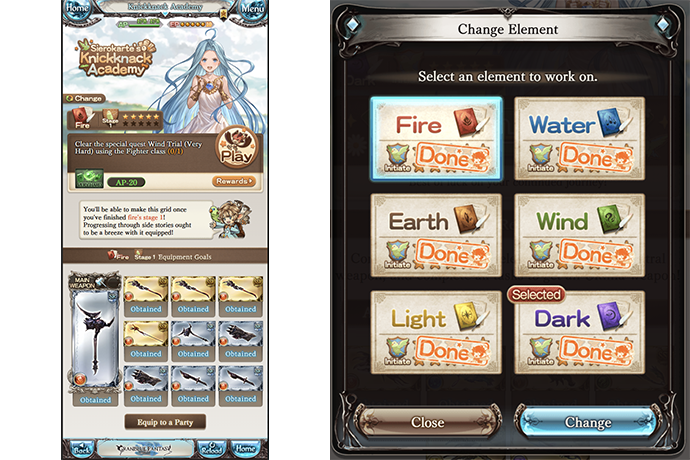
To support newer skyfarers, a tutorial system called Sierokarte’s Knickknack Academy was added in April 2024. Sierokarte’s lessons involve various tasks, conveniently split by element, to help players naturally learn the game’s battle mechanics while strengthening their parties. If they complete all of Sierokarte’s lessons, they can also earn other powerful equipment and special characters.
Touching on the Expansive Grandeur of the Sky Realm
Next, we’ll dive into an interview with Granblue’s creative director.
- Creative DirectorTetsuya Fukuhara

- Having joined Cygames in 2012, Tetsuya Fukuhara has been involved with Granblue Fantasy as its director for eleven years, steering its development and management from its inception to 2024. Currently, he oversees the development of console spin-offs and continues to seek new ways to introduce the Granblue Fantasy franchise to a wider global audience. His other titles include Granblue Fantasy: Versus, Granblue Fantasy Versus: Rising, and Granblue Fantasy: Relink.
How did you come up with Granblue’s story? What about the concept of the Sky Realm?
Fukuhara: Granblue’s concept was centered around “classic fantasy.” From the start of the project, we were asked to create a classic story which would be well supported and appeal to fans of a wide range of games.
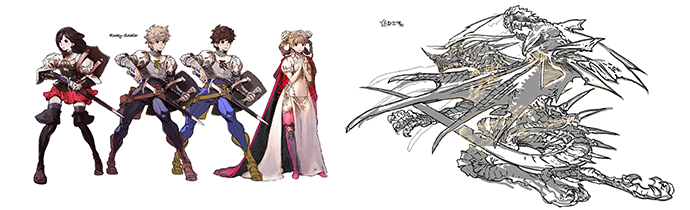
By the time this direction was decided, Hideo Minaba and several others at CyDesignation had already done some brainstorming, and drawn up concept art of a world with islands floating in the sky—similar to that in the current visuals for Granblue Fantasy. We were able to use this as a jumping-off point and clearly establish the orientation we wanted to go for ourselves: an RPG themed around a world in the sky.
By having the story unfold as players travel between islands floating in the sky, we could easily depict the different landscapes, customs, and cultures of each island—even if played on a small smartphone screen. I think the vividness of Granblue Fantasy’s artwork makes it easier to get a feel for how vast the Sky Realm is beyond what the player is seeing on their screen.
As creative director of such a long adventure, what do you keep in mind to ensure players continue enjoying their time skyfaring?
Fukuhara: Because Granblue Fantasy’s setting in the sky is the major feature of the game, part of its charm lies in portraying phenomena and landscapes which couldn’t exist here on Earth—thanks to its laws of physics differing from the ones in our world. We’ve always attempted to convey those senses of vastness and space that would make players feel that excitement for the unknown and say, “I wonder what will happen next” or “I wonder what lies at the edge of the Sky Realm.”
We’ve actually based the Sky Realm on our own universe. And out there in space, events happen on a scale that is completely beyond our understanding, right? So, we also try to place emphasis on including things in Granblue Fantasy that pique our own curiosity about the unknown and what we find mysterious.
Islands and skydoms of all shapes and sizes have appeared in Granblue. Are there any settings that have stuck with you?
Fukuhara: When it comes to creating environments of “the sky,” they tend to end up resembling each other—all just blue yonder and clouds. So, relying on the strengths of our artists, we’ve focused on giving different looks to each piece of scenery, be it through the clouds, the wind, or something else.
One particularly memorable example was the enormous relic that is Nalhe Great Wall. We’d created it after we felt we needed to make something impactful, something that would instantly identify this as a new skydom, as it appears when player first crosses the skydom in the main story.
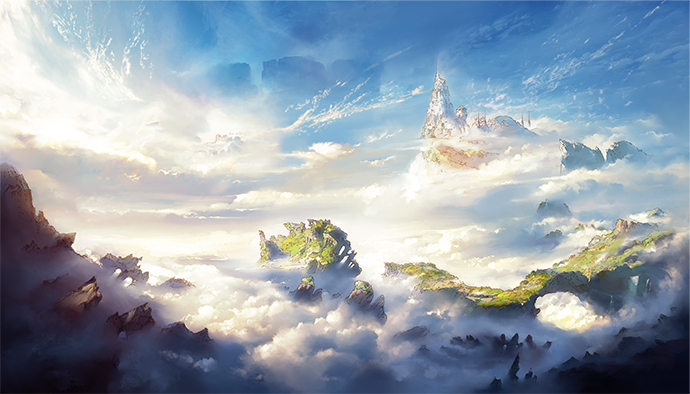
As the name suggests, it was inspired by the idea of having a structure like the Great Wall, but in space. We presented it as this mysterious landscape that deviates slightly from the game’s logic up to that point. With it being a wall towering into the sky on a scale overwhelmingly larger than the islands, we wanted to create the sort of fantastical landscape that would make players think, “Wow, what is that? I want to go there!”
For the new skydom, our aim was to make its culture seem different by giving it an Asian-inspired vibe. I remember we prepared many background illustrations for it, so players could feel a shift even from the generic scenery like villages, grasslands, and caves, signaling that the climate had changed from what they’d seen on their adventure thus far.
You’ve spent so much time involved with Granblue. Could you tell us what moments have left a lasting impression on you?
Fukuhara: Right after launch, we managed to get many reactions that the game was fun, which made our whole team want to live up to that feedback. I still remember the enthusiasm we felt as we all worked incredibly hard to quickly deal with bug fixes and game updates. We had to postpone the launch once, and service started right after the second beta test—everyone must have been running on fumes—but I believe our experience of having overcome that has helped keep us going as well.
Eleven years later, and now I’ll talk with players at events or someplace, and they’ll say, “I have fond memories of playing Granblue when I was young.” Some have even told me that Granblue inspired them to pursue a career in the gaming industry. I find myself thinking “I’m glad we worked so hard back then” more often.
How to Enjoy Granblue Fantasy
Can you tell us about any future developments for Granblue?
Fukuhara: A new chapter of the main story will begin soon. From this new chapter, I will be taking a step back from handling the main story, and the scenario team will be leading its development. In that regard, things might have a slightly different vibe, in a good way—like a breath of fresh air. I’ve already felt this during the preliminary stages, so I think that both veteran and new players will feel a surprising newness with the game. I hope they all enjoy the new setting and storyline.
How would you like newcomers to experience the game?
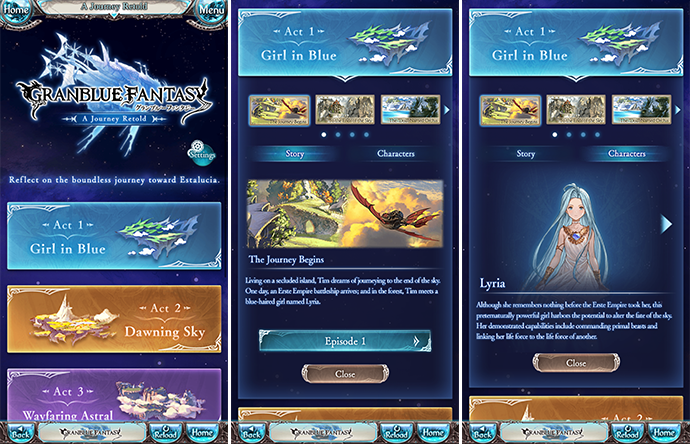
Fukuhara: The main story contains eleven years’ worth of content, so while I’d honestly love for players to slowly savor the story and experience it all in order, I do recognize that it’d be a pain to catch up on all of the story from the beginning. So for players who’d rather get the gist of the plot and jump right into the latest chapter, I recommend a new recap feature we added in October called A Journey Retold*. It’s a convenient way to enjoy the key points of the story in streamlined episodes.
In addition to A Journey Retold, we’ve included another feature that sails through a condensed version of the story chapters up to major milestones, with its own exclusive scenes. It should allow new skyfarers to play at whatever pace they prefer.
*At the time of publishing, only act one, Girl in Blue, has been added to the A Journey Retold feature. Act two, Dawning Sky, and act three, Wayfaring Astral, are planned to be gradually added in future updates.
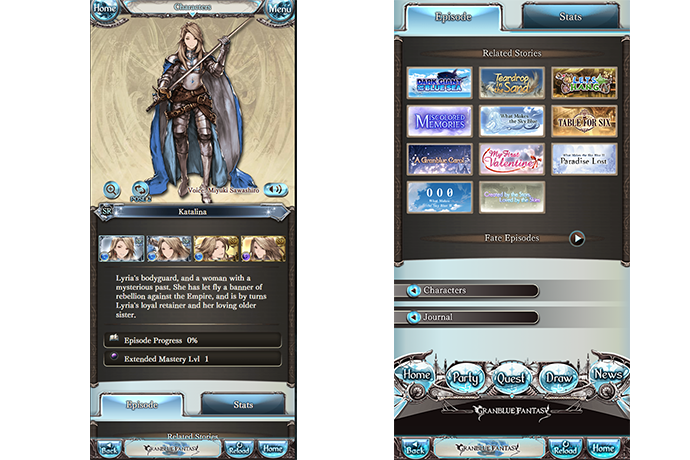
Granblue also holds story events at the end of each month. These events have their own unique storylines separate from the main story and contain a variety of characters and settings. I recommend players play the side stories which feature the characters who they find interesting. That will allow them to not only start with their favorite characters, but also gradually get to know the ones they don’t.
Going forward, new tales, enemies, and other content will be added, and a new chapter of the main story will begin. If our newer skyfarers use the Skip or A Journey Retold features, they can catch up to the latest story content in a flash, and should be able to have fun playing the new content alongside veteran skyfarers. I hope everyone feels like they can start playing anytime.
Lastly, could you tell us your tips for playing Granblue, or parts of the game players should be excited to reach?
Fukuhara: For those about to start their skyfaring journey, I think they should first try playing Sierokarte’s Knickknack Academy*. Its content helps them become stronger while naturally learning the flow of the game. As players complete tasks, they’ll gradually learn how to fine-tune their parties and see their progress as they play.
Also, for returning players, I’m sure there are likely new raids they haven’t seen before. I suggest they first tackle any raids they haven’t completed yet first—along the way, they’ll pick up new materials and weapons, which should help shake off the rust and get back into the swing of things.
*Sierokarte’s Knickknack Academy unlocks after chapter eight of the main story, but new players can access it sooner by using the Skip or A Journey Retold features.
Even now, after eleven years, the Granblue Fantasy Team is determined to delight and surprise each of its players. We hope they’ll continue to enjoy Granblue through its next adventures.
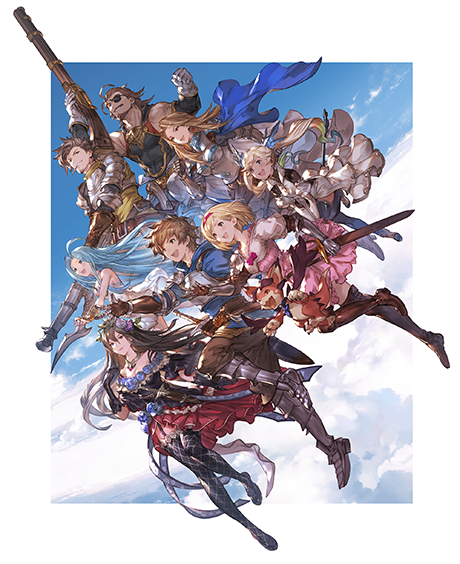
In this article, we gave an overview of the plot of Granblue Fantasy and some pointers for players just starting out with the game.
In part two, we’ll introduce a summary of the main story, plus an inside look at the scenes players will encounter in the story.
Read Part Two: Main Story