





Taking to the Skies of Granblue Fantasy: The Main Story
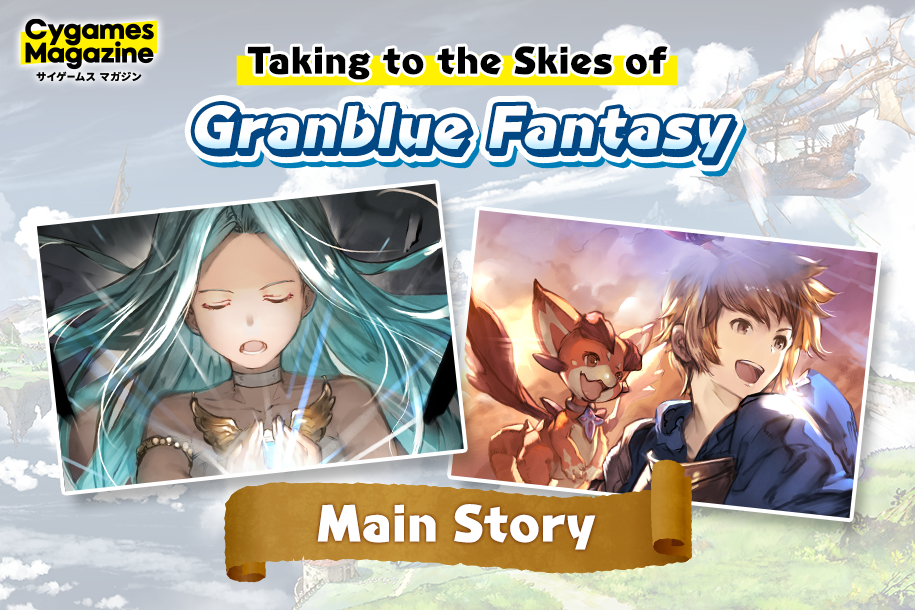
Granblue Fantasy is an RPG set in a world of sprawling skydoms, where bold adventurers called skyfarers set out on epic journeys.
For the second half of our two-part series, we’ve set out on a quest of our own to help players get an in-depth overview of the main story. Along the way, we’ll also hear from some members of the Granblue team on their inspirations and what they hope to convey when crafting the game’s tale.
Newer skyfarers should read part one first, as it touches on beginner-friendly content, plus the origins and worldbuilding of Granblue.
Note that this article will contain spoilers.
One Quest, Three Acts
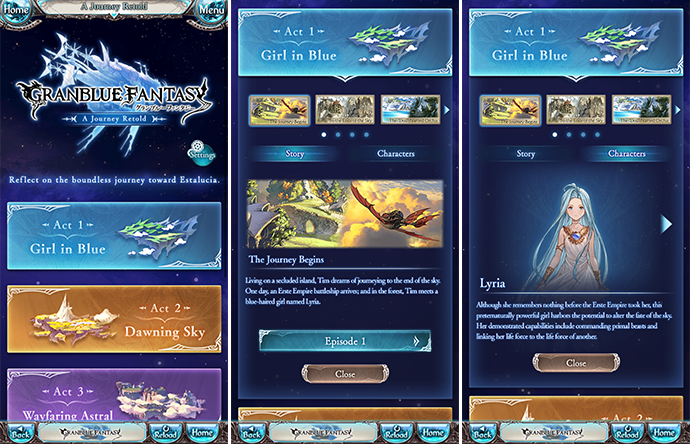
Granblue’s main story thus far has been told through three acts: “Girl in Blue,” “Dawning Sky,” and “Wayfaring Astral.” Combined, these form the first arc which follows the captain’s long voyage across the Sky Realm—from when they set off in search of their father until they reach the major milestone of their quest.
But with the Estalucia arc ending in December of last year, and new main story chapters on the horizon, we’ll take this opportunity to recount the crew’s adventure to reach Estalucia for both our new and veteran skyfarers.
Act One: Girl in Blue
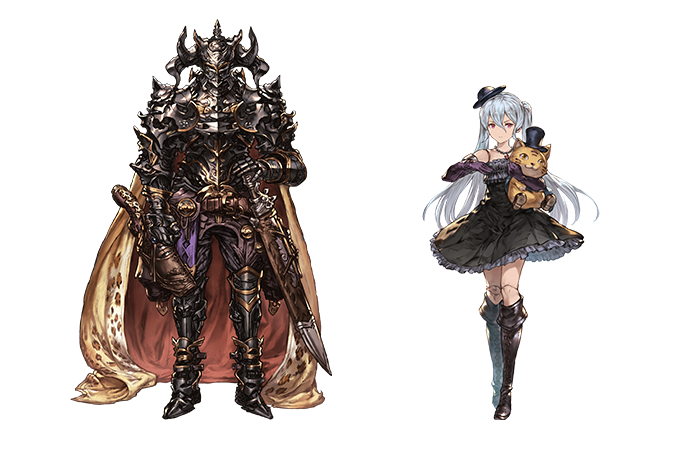
On the sleepy island of Zinkenstill, the player character receives a letter from their missing father stating that he is waiting in Estalucia, the Island of the Astrals. With this message in mind and their companion Vyrn at their side, the player character decides to embark on a journey to the edge of the skies. Right as the pair set off, they have a chance encounter with a mysterious girl named Lyria and her knightly protector Katalina. But the Erste Imperial Army is right on Lyria and Katalina’s tail, so the group flees Zinkenstill together.
After a bumpy flight to their first island, the crew recruits the helmsman Rackam, kick-starting their journey aboard the Grandcypher. Along the way, the captain adds more members to the crew: a young mage named Io, the skilled veteran Eugen, and the enigmatic Rosetta, to name a few.
In their travels, they face incidents involving primal beasts and turmoil unfolding across the Sky Realm—each case revealing more of the Erste Empire’s intentions, and the plans of the empire’s prime minister, Freesia. Progress to reach Estalucia is halted by the Black Knight and a run-in with Orchis, a girl who possesses strange powers, but the crew comes out of these encounters with stronger bonds than ever before.
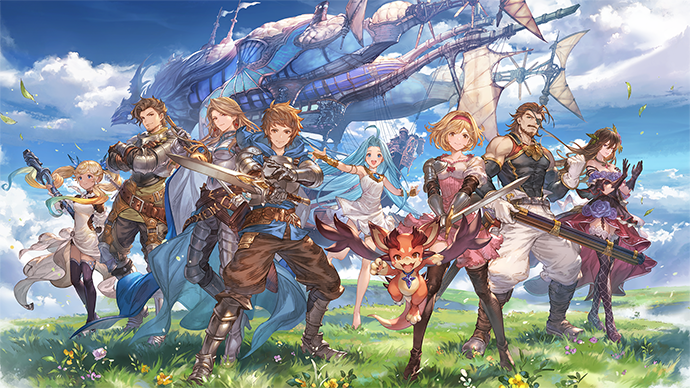
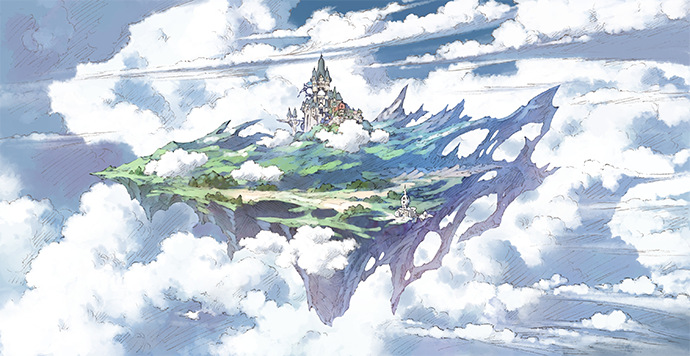
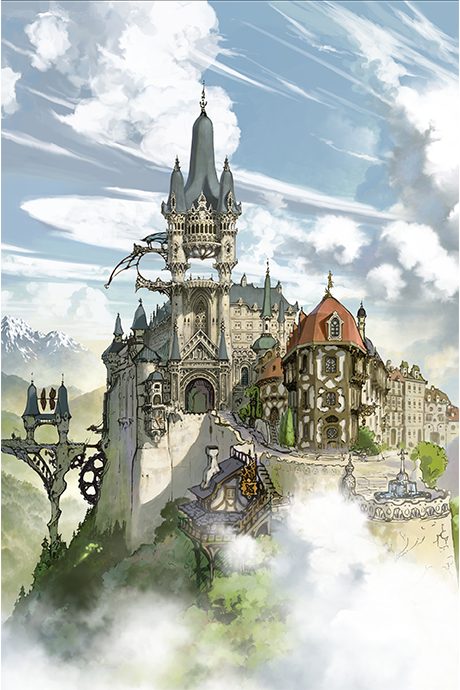
Though many are the locales which dot the Sky Realm, the Phantagrande skydom serves as the stage for act one. Carried on the rolling winds of Port Breeze Archipelago, the crew sets off to several of Phantagrande’s distinctive locales—from an island powered by a booming steel industry to isles ringed by vast seas.
Act Two: Dawning Sky
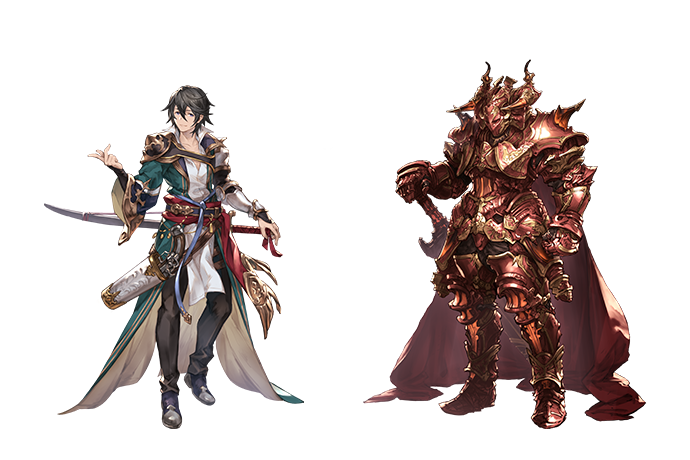
Buffeted by turbulent gales from the miasma-filled Grim Basin, the crew is scattered across the Nalhegrande Skydom. The captain ends up in Idelva Kingdom and meets the young man Cain and his allies. With their help, the captain sets out to reunite with the rest of the crew, but along the way, an even more complex situation emerges—one where nations use war to expand their influence, and political figures quietly scheme behind the scenes…
At the center of it all is the Scarlet Knight, a figure who desires peace but ends up accelerating the conflict through his win-at-all-costs actions. As each of these motives intersect, the crew makes every effort to prevent major conflicts, occasionally working together with the opposing forces.
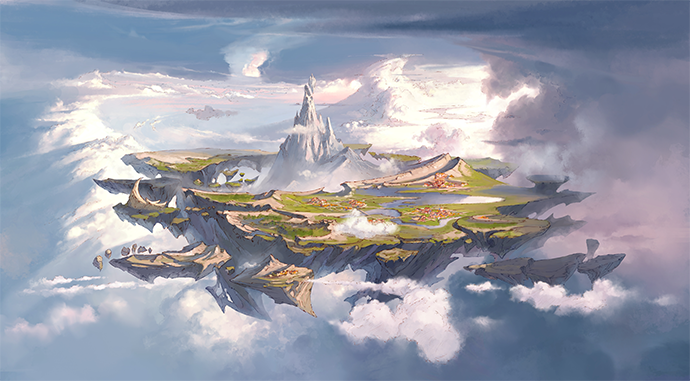
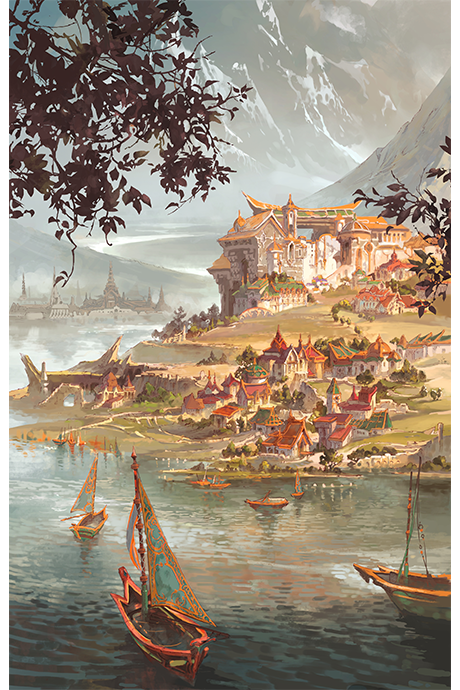
This act takes place in a land beset with conflict as two kingdoms—Idelva and Rhem—vie for supremacy, entangling their inhabitants in the feud. Still, Idelva’s position as one of Nalhegrande’s most powerful nations has permitted it to erect a picturesque metropolis on its central hub, Groz Island.
Act Three: Wayfaring Astral
After the battles in Dawning Sky, the Sky Map pieces from Nalhegrande bring the Grandcypher to the Great Oarlyegrande Skydom. Upon arriving, the crew comes face to face with the Istavion Kingdom—which seeks to expand its rule over every skydom—and the resistance forces fighting against it.
The crew also has another chance reunion with the mysterious Loki, pushing the tale deeper into the very foundations of the Sky Realm.
The journey to Estalucia reaches a turning point as mysteries once scattered about the Sky Realm come together: Lyria’s secret, the captain’s upbringing, and the letter from the captain’s father that started it all…
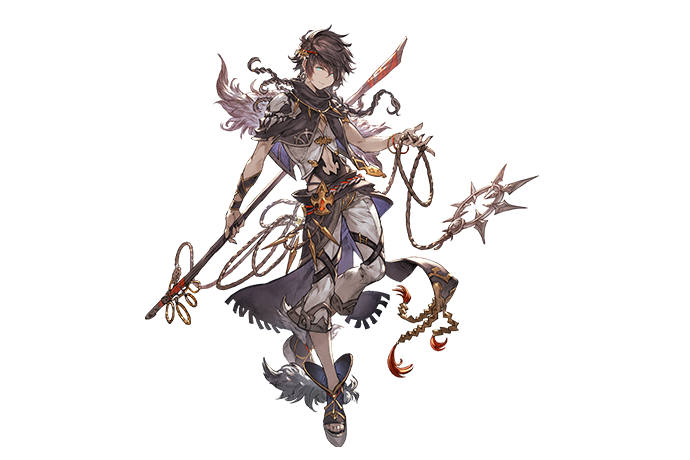
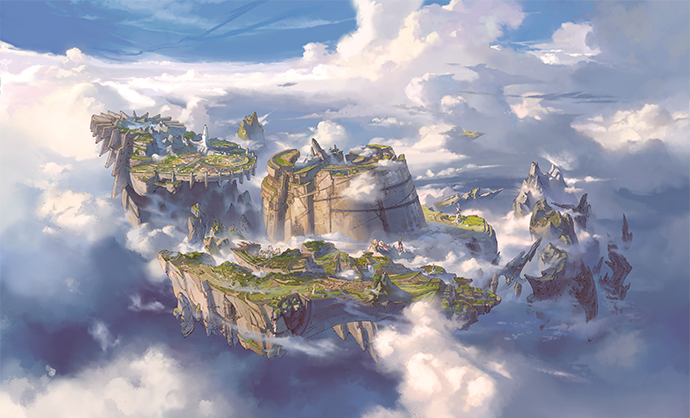
This act is set in the Great Oarlyegrande Skydom, a region ruled by the Istavion Kingdom through fierce military might. On top of the kingdom’s harsh rule, the islands here face a growing series of strange happenings.
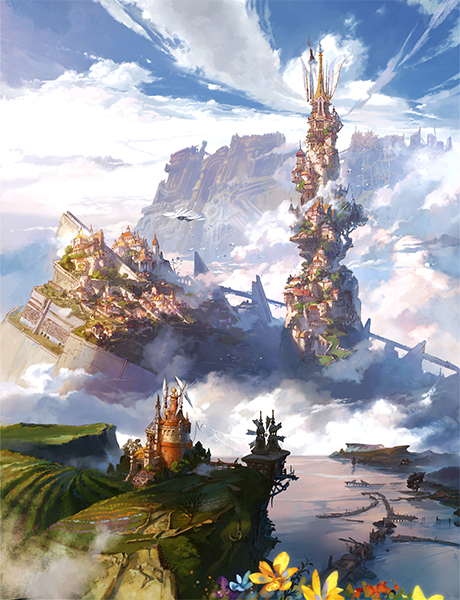
Crafting Granblue’s Story and Its Sky Realm
Now, we’ll dive into our interview with three members of the Granblue team.
- Scenario DirectorKyohei
- Manages Granblue’s narrative. He mainly writes main story content alongside other scenario team members.
- Game DesignerIori
- Handles Granblue’s in-game events from planning to implementation. He also acts as the event team leader and primary content supervisor.
- Script SupervisorAnan
- Creates and supervises dialogue scenes for Granblue’s story. She also serves as the script team’s leader.
What do you find appealing about each act of the main story?
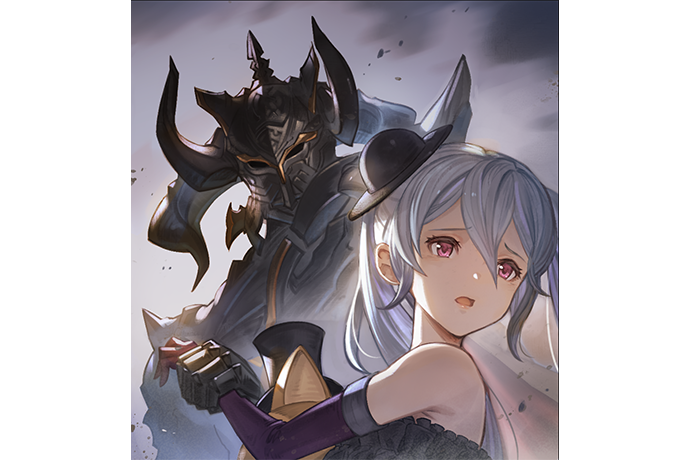
Kyohei: Girl in Blue is the initial story that slowly teaches players more of Granblue’s worldbuilding. Through the various events that happen on each island, players gradually come to understand more about the captain and the characters around them. One of the act’s major themes is the identity of Orchis, a pivotal character in Girl in Blue. The act explores the crew’s doubts about how they should handle a complicated situation after the original spirit of Orchis’s body is restored, and Orchis gains a different identity as Orchid in a new golem body.
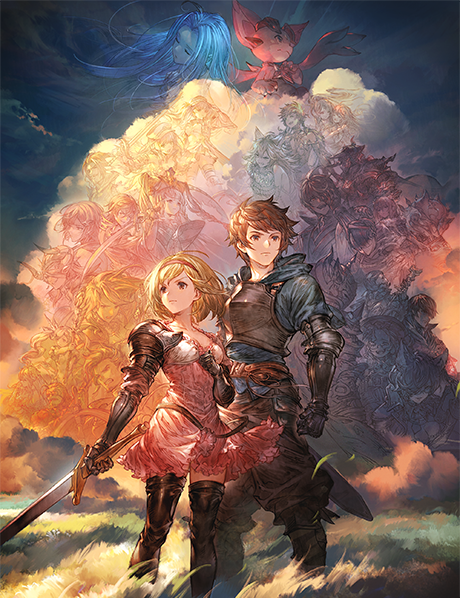
Following Girl in Blue is Dawning Sky, which adds a political element to the story with its main beats of cross-national conflict and secretive moves, expanding upon the broader worldly affairs of Granblue. The arc features characters who fight for peace but whose methods are not necessarily “good.” I hope players will pay attention to how, in situations that can’t simply be resolved with a few quick words, the captain and their crew keep talking things through and guide things to a solution.
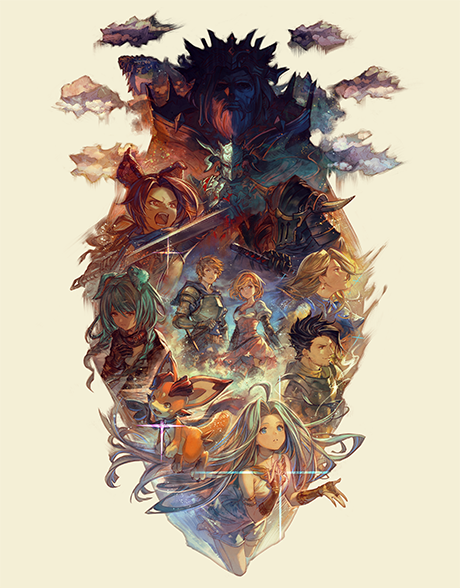
Wayfaring Astral centers on a core theme of Granblue: the voyage. While the captain does continue their search for their father, another character also finds a path for himself—Loki, who was once a directionless drifter, becomes a true voyager. In this fashion, Wayfaring Astral marks a pivotal moment for Granblue, digging into questions like, “What is a voyage?” The act brings several threads to a close in what feels like a culmination of Granblue’s tale so far: Lyria’s many mysteries, the captain’s upbringing, and last but not least, the captain’s father and the letter from him which started this journey.
What do you keep in mind when working on a story to make it appeal to players?
Kyohei: One thing is that the players see the story from the captain’s point of view. We try to make the story more fun and immersive by including dialogue choices during conversations or interactive narrative scenes during battle.
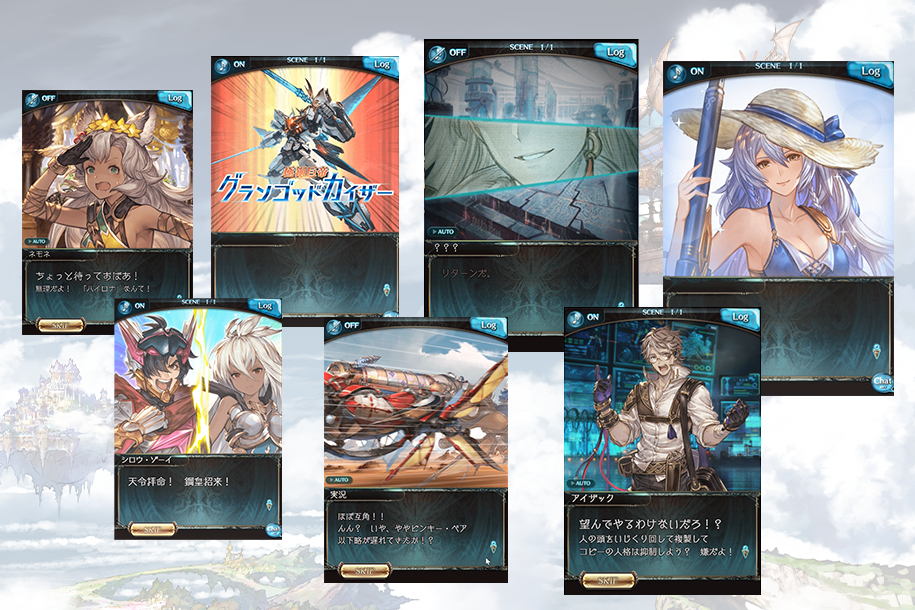
Anan: In dialogue scenes, we try to keep visuals from feeling repetitive by varying the density of information—either by using character close-ups, split screens, or other techniques.
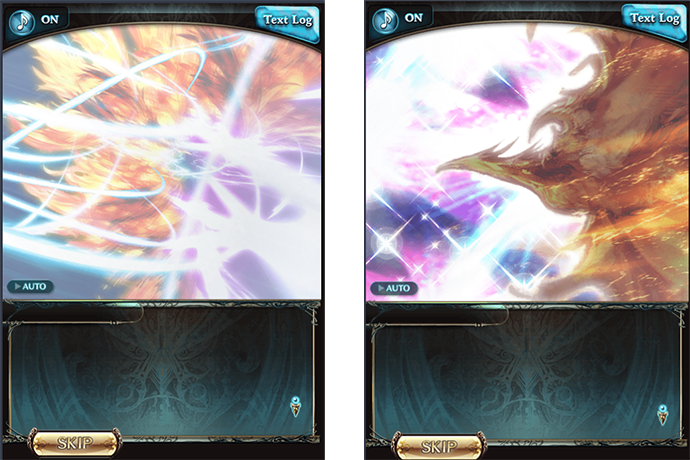
For example, in the scene where the Phoenix fights in the event Heart of the Sun, video-editing software was used to create animations so that Phoenix could fly around. I think it turned out pretty impressive in the end.
Kyohei: We consulted Iori for the main story’s final chapter from the initial creation stage, as we assumed that chapter would have story content in its battles.
Iori: Usually, the battle scenes only start being created once the story has been finalized. But for the final chapter, we worked on the battle and story content at the same time. We would first hash out things like, “Lyria and Vyrn are in this sort of situation, so we should show them in this way during the battle.” I think that approach allowed us to increase the sense of immersion for that portion of the story.
How do Granblue’s side stories link back to the main story? Is there anything players should know about them?
Kyohei: In the side stories, players can get a deeper look into parts of Granblue’s world that aren’t depicted in the main story. In the main story, the crew heads from one island to the next, often only spending a short time on each one. So the side stories are where players can reacquaint themselves with the characters connected to those islands and really dig into the reasons why they might reappear in the main story.
What’s more, some side stories feature islands that aren’t even touched on in the main story—like Feendrache, where Lancelot appears.
Play Your Own Way:
The Production Team’s Tips on Navigating the Story
How do you recommend players approach Granblue if they’re itching to dive right into the story?
Kyohei: Granblue has a wealth of content, so I think what’s most important is that they play the game in a way that suits them. We aim for a level of production where each scene of story content is as enjoyable as a movie. We also strive for the battles alone to feel like they’re worth playing.
Players can start with the main story, or the events at the end of each month, but I also don’t think they can go wrong with testing the waters first and playing side story content. Some events have characters join the crew, so players can still boost their battle capabilities by playing events.
Iori: Most battles in the story can be fought with a special party made up of the characters from that story. This means beginners can enjoy the in-battle scenes as part of the story without worrying about choosing the “right” characters for their party.
I also recommend Sierokarte’s Knickknack Academy for people who are just like, “I don’t know where to start!” Its content allows players to naturally get the hang of the game’s mechanics and make their parties stronger as they complete missions, so I think it’s an easy way to casually get started with the game.
Anan: As someone who handles the script, I’d love for players to check out the A Journey Retold feature. It covers the key points of the main story, so it works as a recap for both people who already know the story and people who worry they’ll be behind if they start Granblue now.
I also personally recommend the events at the end of each month. One of the best things about them is that there isn’t a whole lot that needs doing before playing them, so even players who just started that day can read the month’s event right away.
New players might find themselves in dialogues between unfamiliar characters, but I think players can still find those scenes enjoyable since they’ll have things explained to them in the story, or through the frequently updated side stories.
Iori: Granblue is a game full of love for its characters. Characters have their own seasonal cutscenes and dialogue for holidays like Halloween, Christmas, and Valentine’s Day. Each character has a lot about them for players to learn and explore, so I recommend trying to enjoy the game based on the characters.
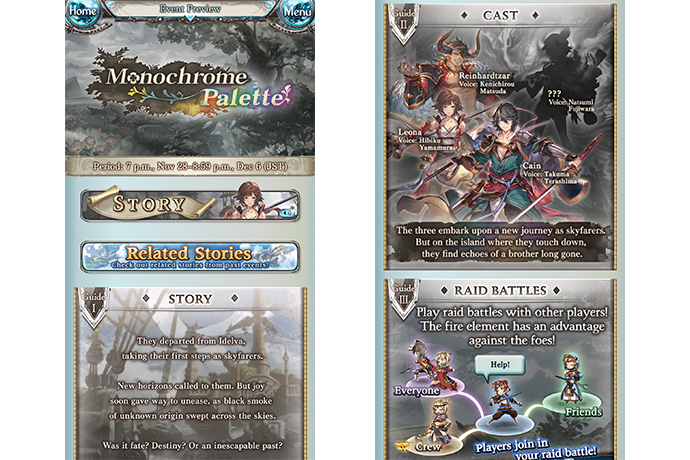
When a new story event comes out, we present the encounterable characters and related fate episodes/events on the in-game Event Preview page. Because we design story events so that even the newest event can be a comfortable starting point for beginners, I hope events can be where players begin to deepen their love for Granblue’s characters.
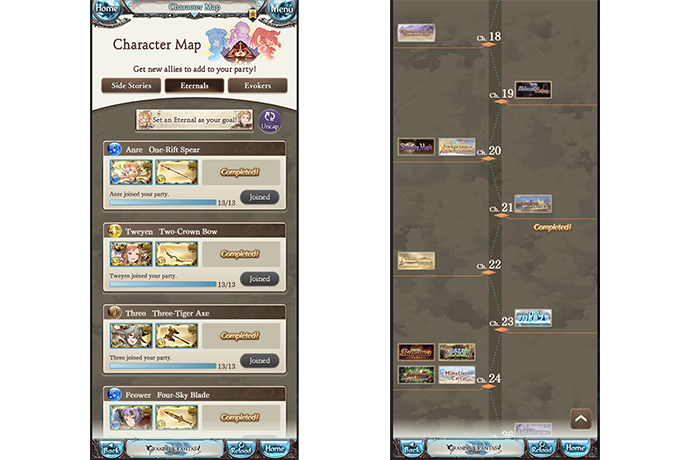
Speaking of in-game features, there’s also the Character Map page that lists out the main and side story chapters chronologically and which characters will join your party when. It’s really convenient. I think using that to find a character that you like and reading the story they appear in could be a good way to get started too.
Could you tell us about any moments working on Granblue’s story that have stuck with you?
Kyohei: Getting assigned to the Granblue team has been the biggest pivotal moment for me, and thus the most memorable, but if I had to pick a moment from within the game, I’d have to say the end of Girl in Blue. It was quite memorable for me since I wrote out that part of the act while trying to fully explore the notion of what would happen if two people shared the same persona.
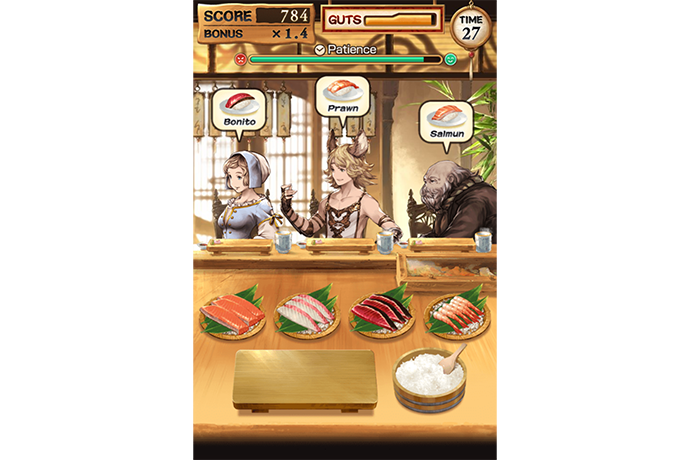
Iori: The thing that’s stuck with me the most was creating the Kappa Summer Chronicle minigame where players make and serve sushi, as it’s slightly different than other story events.
It was my first time working on a minigame, so I paid particular attention to details like the sushi-making animations and UI, and created something that could be played stress free through a lot of trial and error with my coworkers. I was so happy to see everyone getting excited about it after release. I think that experience has definitely left marks on the work I did afterward.
Anan: I think the Heart of the Sun event was a pivotal moment for me as a script team member. How a dialogue scene turns out can vary depending on the directing; it’s all about the synergy between the writers and the production team. For the Heart of the Sun event, when I read the scenario, I was able to feel right away how enthusiastic the writer was, how much they wanted the players to enjoy the event, and the parts where they intended things to be more exciting or develop more dramatically. And we were able to actually present things in the way that they wanted. I think Heart of the Sun is what we managed to produce when we had the most synergy to date.
The event series with Navis has also left an impression on me personally. When I read the first draft of the story, I could sense that this was the beginning of a huge series. We attempted to include a lot of animated scenes in the series, so after it released, I was very happy to see everyone say they thought it was good.
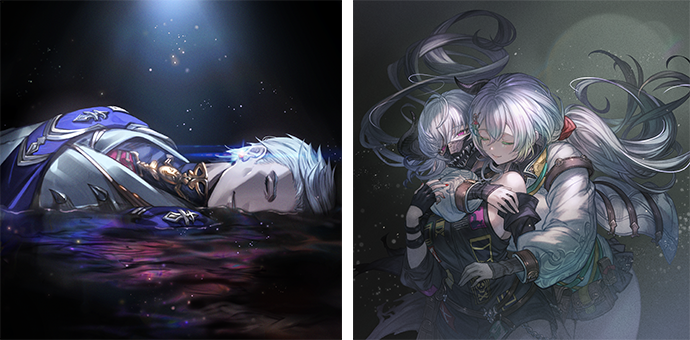
Marionette Stars (left) and Unbound Asterism (right).
Lastly, what would you like to say to players who will be playing Granblue for the first time?
Kyohei: With its rich story, characters, and battles, the game has a ton of content, so I think there’s something in it for everyone. The game is about to reach its twelfth year since launching, but it’s absolutely not too late to start now. We’ve set a variety of tutorials up so that even first-time players can jump in and enjoy themselves, so if you’re even a little curious, don’t hesitate to give Granblue a try.
For those already playing, I’ll say that we’ll be adding new stages to the main story. We have many plans for the future of Granblue Fantasy, so we aren’t just simply trucking along—we plan to continuously take it to greater heights, so I hope our skyfarers will continue to stick with us.
Iori: Granblue is a game that has a wide and colorful cast of characters, as well as a ton of content. I hope new skyfarers will try and just get a feel for it until they find their own preferred playstyle.
We’ll also continue to create events and content that our future skyfarers can enjoy, so please look forward to that.
Anan: I work on the dialogue scenes, so my answer may be a bit skewed toward that, but we work hard to make our dialogue scenes better, constantly refining them through trial and error. Everyone on our team is really passionate about what they’re creating, so I hope players will be able to get a small sense of that. Please look forward to what we have in store!
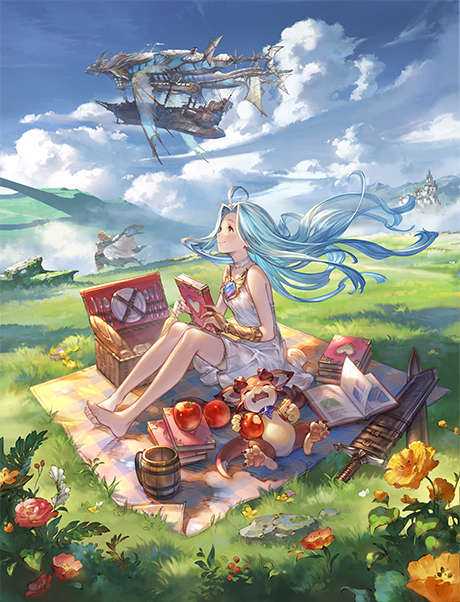
In this article, we took a more detailed look back at each act of the main story. We also heard some advice on playing Granblue from production team members who had a hand in making its story.
Part one covers the worldbuilding of Granblue and some pointers for players just getting started with the game. Be sure to give that a read if you haven’t already!
Read Part One: Worldbuilding